
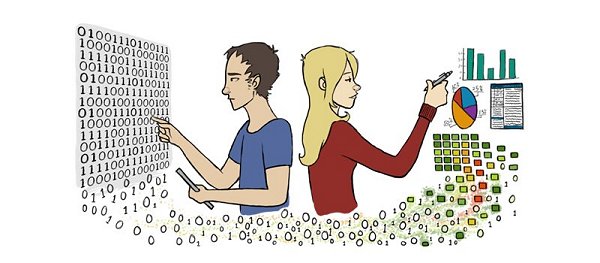
“Data” and “Information” are always used interchangeable.
“Data” and “Information” could also mean the same thing depending on the context you are viewing it from. However , most times, data must come first before information.
How?

“Data” can be any character, text, words, number, pictures, sound, or video and, if not put into context, means little or nothing to a human.
For example: A bank’s customer data. This will include personal information, demography and financial transactions data done overtime.

“Information” is data that is (1) accurate and timely, (2) specific and organized for a purpose, (3) presented within a context that gives it meaning and relevance, and (4) can lead to an increase in understanding and decrease in uncertainty.
Information is valuable because it can affect behavior, a decision, or an outcome. For example, if a manager is told his/her company’s net profit decreased in the past month, he/she may use this information as a reason to cut financial spending for the next month. A piece of information is considered valueless if, after receiving it, things remain unchanged.
Can you tell the difference now?
Let us hear from you…
1. Differentiate between Data and Information with examples.
2. Last week, I was working on a project to analyse the rate of student attrition rates in a private school. The outcome of the study showed that funding issues as a result of increase in school fees was the major cause of 95% students attrition rate.
A. Identify the ‘data’ used for the project.
B. Which sentence best describes the ‘information’ gotten from the data?


 EverythingonData